
ALIGNA - A Healthcare Companion for Women with PMOS
ALIGNA is designed for women with PMOS (formerly PCOS, Polycystic Ovary Syndrome), a hormonal and metabolic condition that affects the body’s balance. For women with PMOS, even small shifts in sleep, stress, diet, or daily routines can ripple through the body, surfacing as unpredictable symptoms that are difficult to understand and often anxiety-inducing. When these imbalances persist, they can also contribute to long-term health risks.
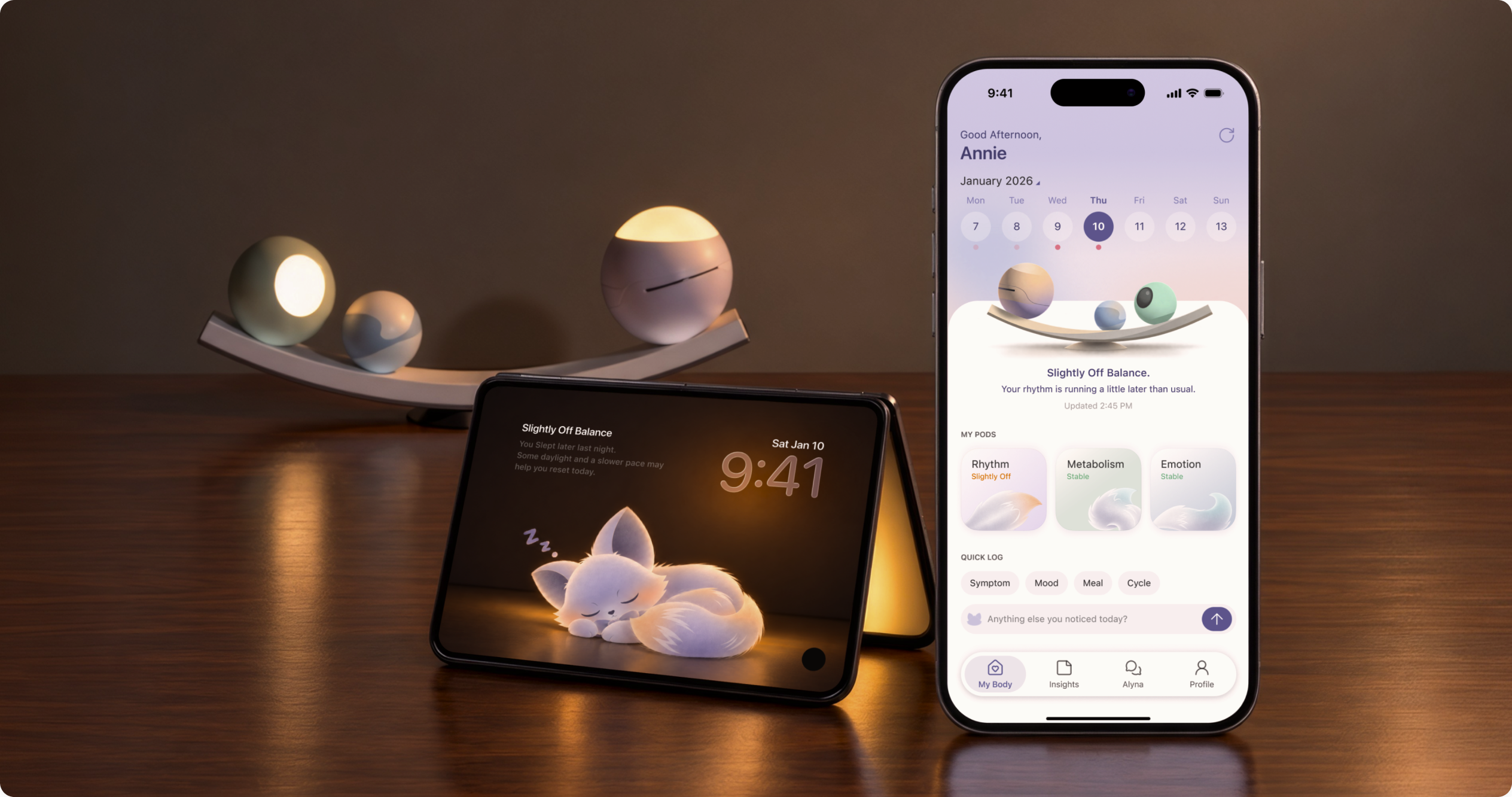
ALIGNA introduces a companion system that combines a physical companion with a mobile health experience, helping women recognize patterns, understand their body’s signals, and navigate everyday care with greater clarity.
- AI-Driven UX
- Healthcare
- Physical + Digital
PROJECT SCOPE
Developed the system strategy and end-to-end experience, translating research into product structure, interaction models, and UX/UI across the health management journey.
Designed and prototyped the physical companion, connecting tangible interaction with the digital experience.
TOOLS USED
Interface Design & AI Figma · GPT · Gemini
3D Design & Prototyping SolidWorks · Shapr3D · KeyShot · 3D Printing
MEET THE COMPANIONS
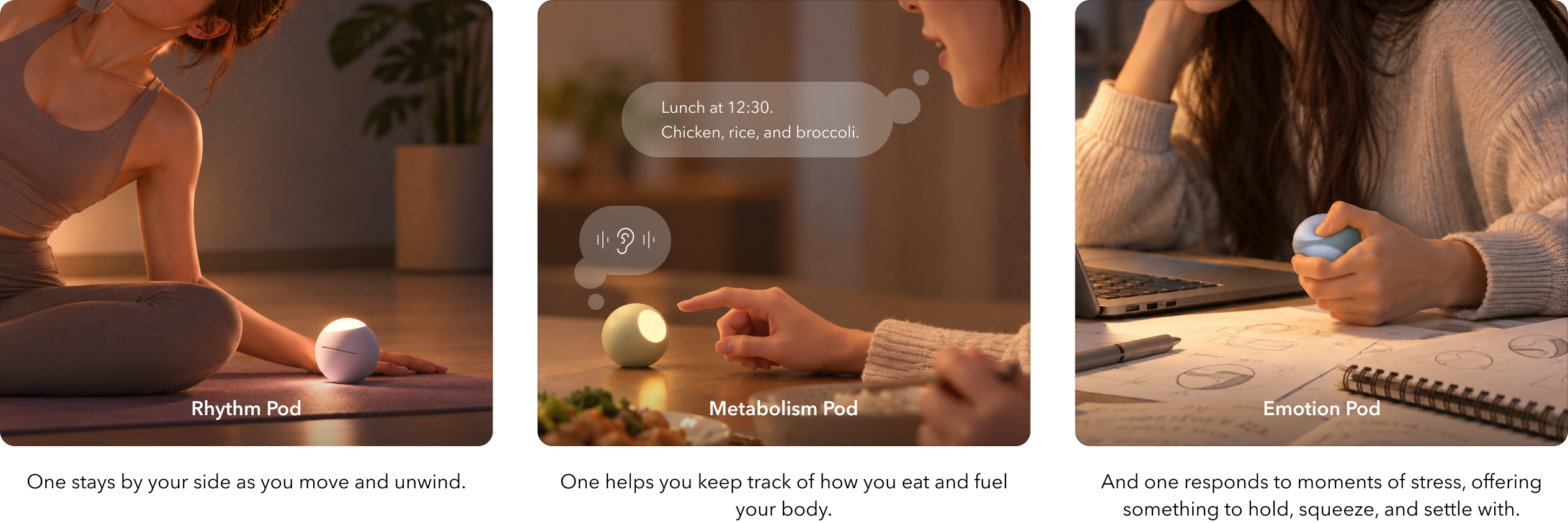
The story begins with three little companions.
Who are they here for?
ALIGNA is designed for women experiencing hormonal imbalances.
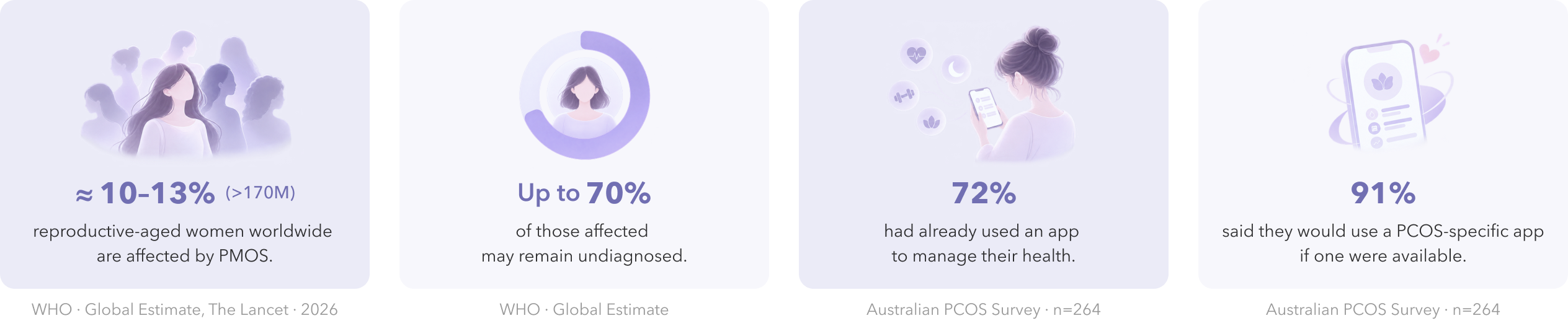
Among them, women with PMOS (Polyendocrine Metabolic Ovarian Syndrome, formerly PCOS), a common hormonal and metabolic disorder, is a critical focus.
For women with PMOS, keeping the body in balance is rarely straightforward. Small shifts in sleep, meals, stress, movement, or mood can disrupt that balance and surface as unpredictable symptoms.
When symptoms appear, women often search for answers. But symptoms vary from person to person, and health information is often fragmented, generalized, or conflicting.
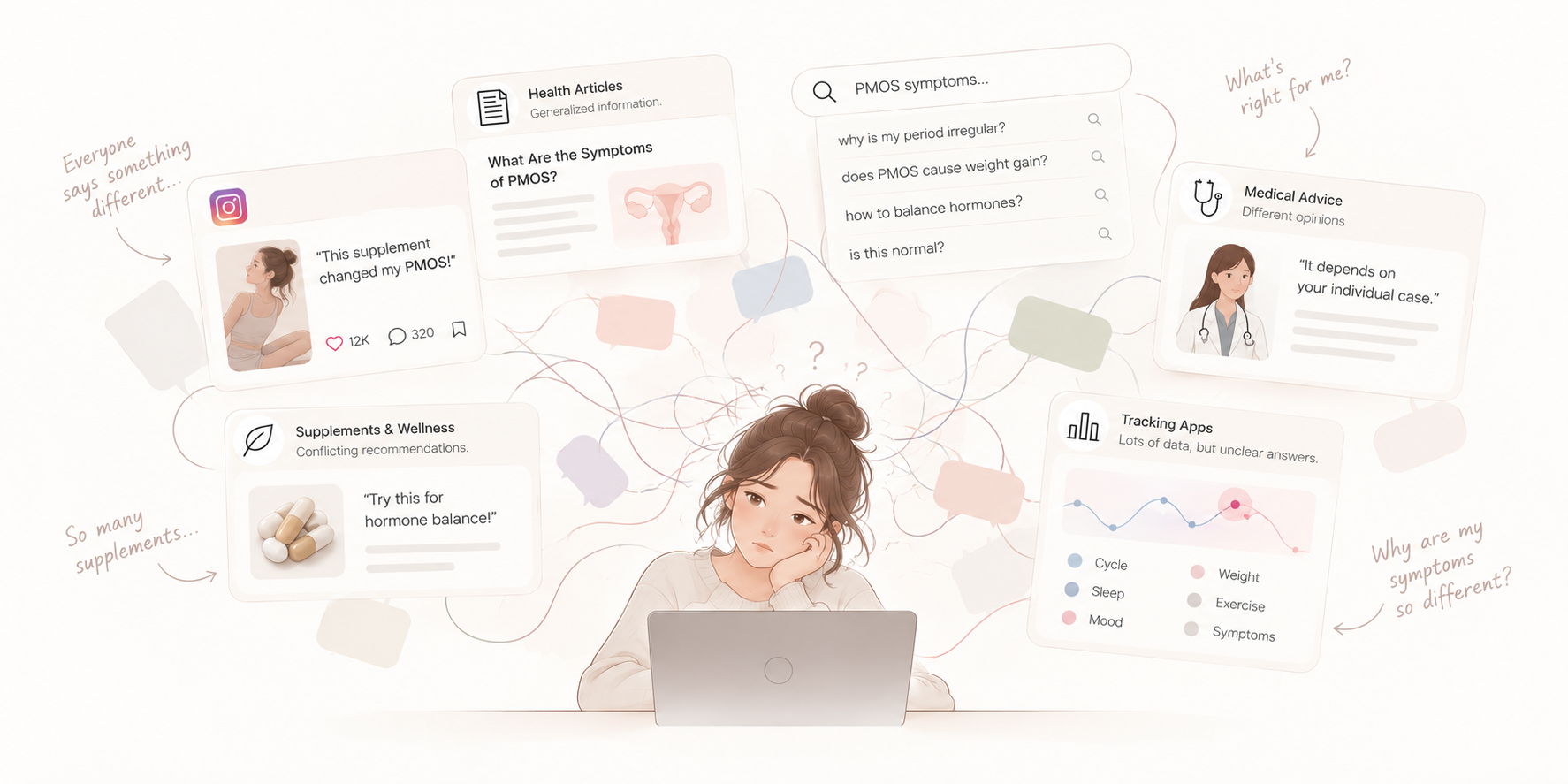
The result is often confusion, anxiety, and uncertainty. Without effective long-term management, PMOS can also carry serious health risks, including infertility, type 2 diabetes, and an increased risk of endometrial cancer.
The Design Challenge
Women with PMOS don’t lack data, they need clarity: a clear way to understand their health data, the why behind it, and what they can do next.
But health data often stays behind a screen, requiring users to remember to check, log, and interpret it.
What if changes in the body could become something you can clearly understand, and naturally notice in everyday life?
Introducing Aligna Through Its Physical Companions
Aligna gives invisible changes in the body a tangible form through three physical companions, each representing a different dimension of everyday health. Each Pod supports different forms of interaction, capturing relevant signals from everyday life as one of the system’s data sources.

Rhythm Pod How your body moves through the day.
Metabolism Pod How your body fuels and sustains itself.
Emotion Pod How your body feels and responds.
But these aren’t three separate parts. They’re connected dimensions of the same body. What if you could see how they affect your balance as a whole?
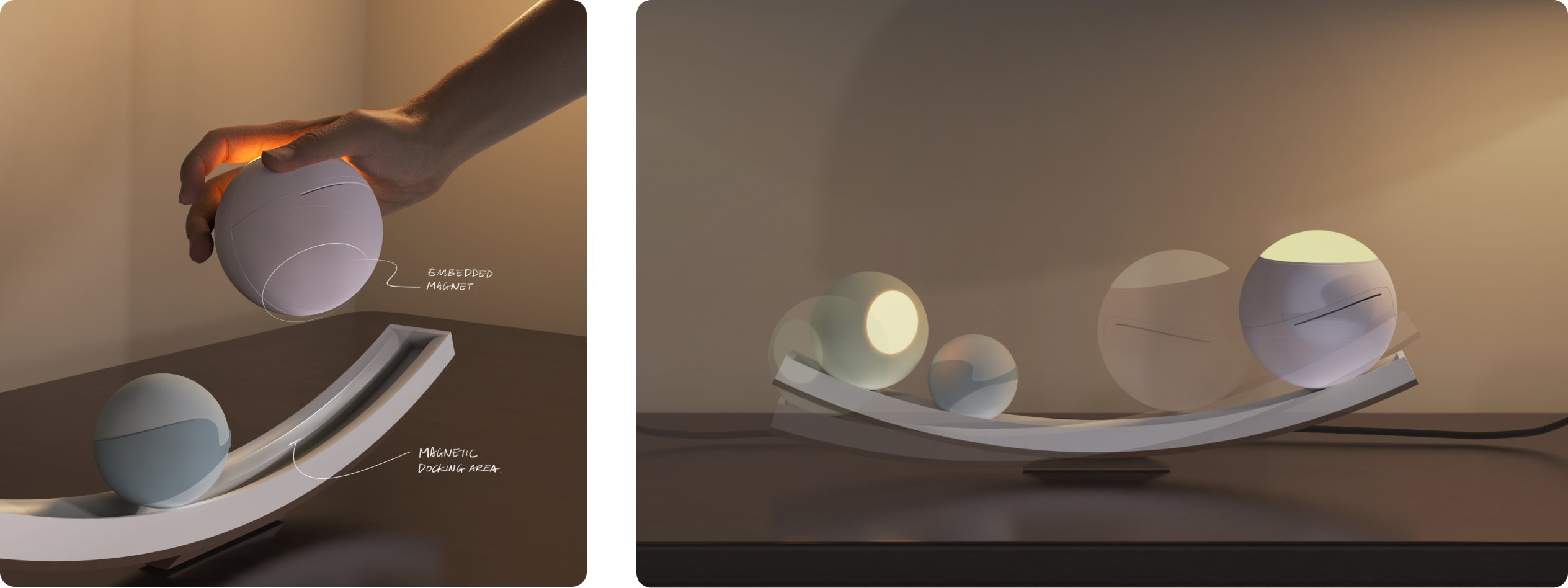
Aligna visualizes your balance by bringing the three companions together on a seesaw. Each Pod magnetically docks onto the beam, which also serves as its charging base. As your body changes, the seesaw gently shifts with the Pods, making changes in your balance physically visible.
From Physical Signals to Digital Understanding
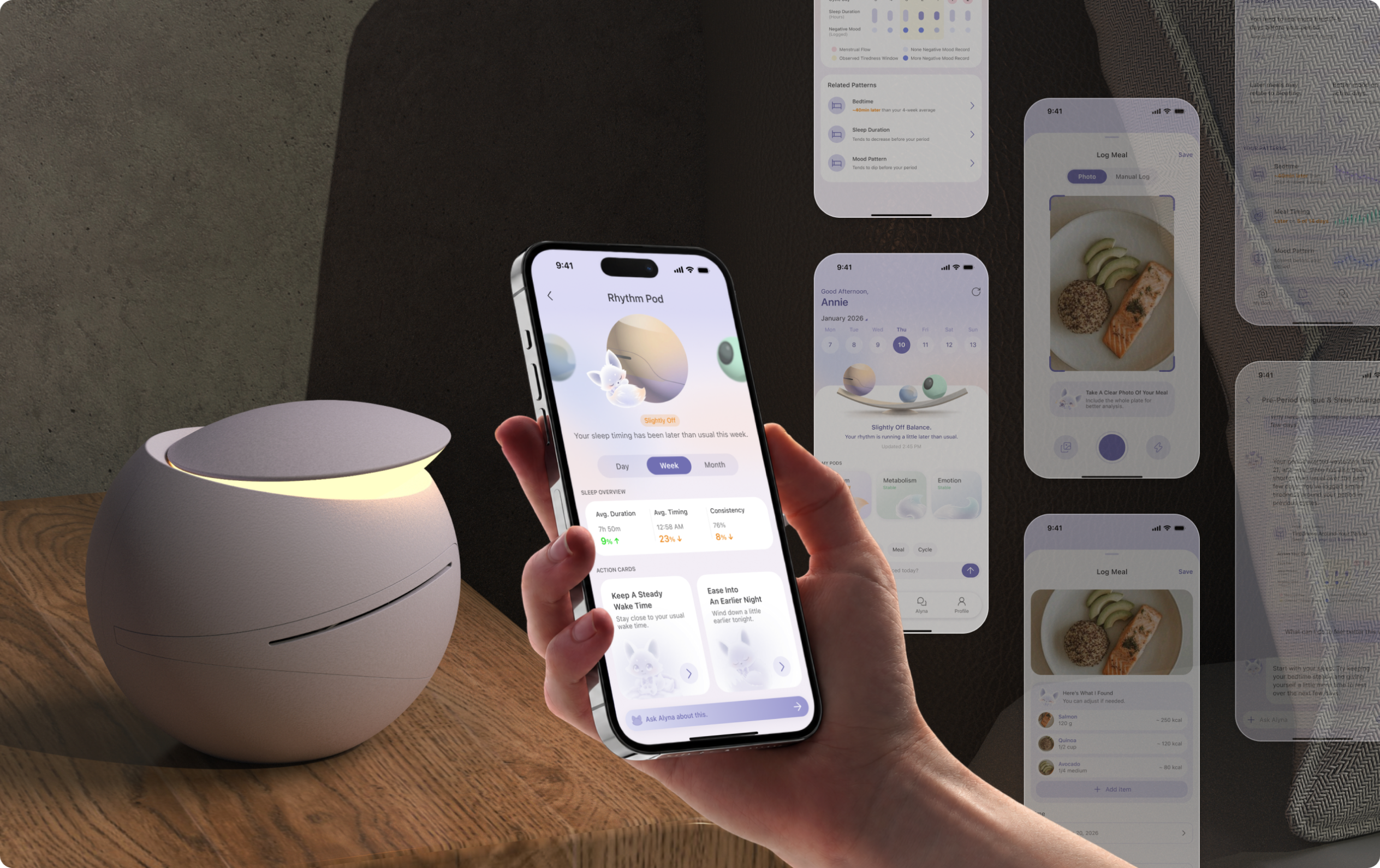
The physical companions work together with the Aligna app, where users can look beyond what the Pods make visible in everyday life.
The app lets users look closer — not only at the data behind each companion and how those signals change over time, but also at a broader health context built from other data sources, such as connected devices and Apple Watch.
But the app isn’t just where the data lives. There’s someone there to help you understand it.

So, who have you been talking to?AI
When you talk to a Pod, squeeze it, or check in on how it’s doing, you’re not really talking to the object itself.
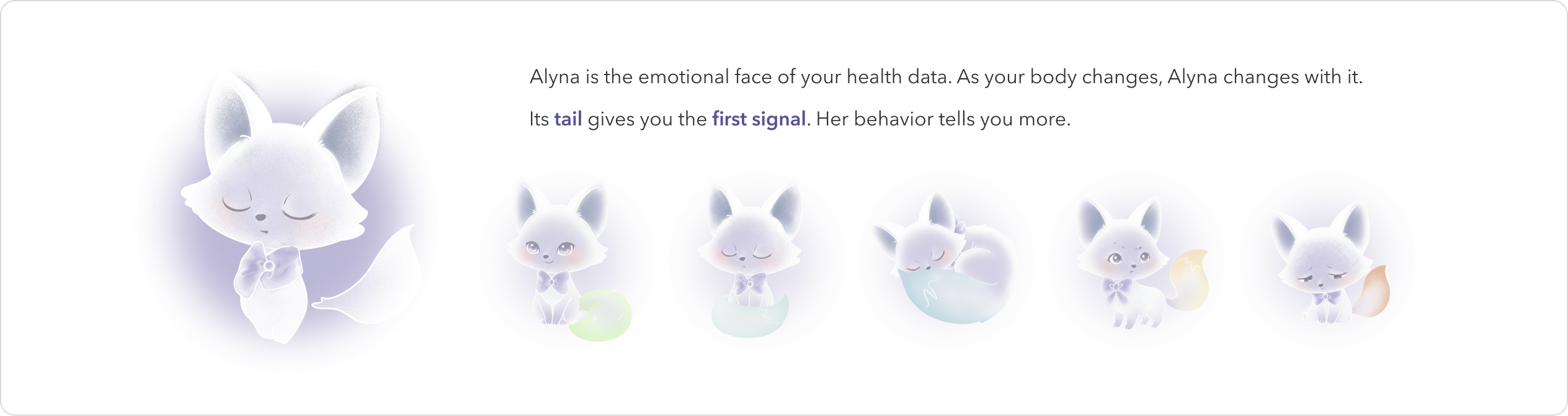
You're talking to Alyna, the little fox that lives inside Aligna.
She stays connected to what the Pods notice and what the app learns over time, turning changes across Rhythm, Metabolism, and Emotion into something you can understand and respond to.
And when you open the app, you finally get to meet her.
Inside the Aligna App
With Alyna as the companion behind the system, its color-changing tail give the app a simple visual language for communicating with users.
Let’s walk through the core experience of using the Aligna app.
01 From Body Balance to Action
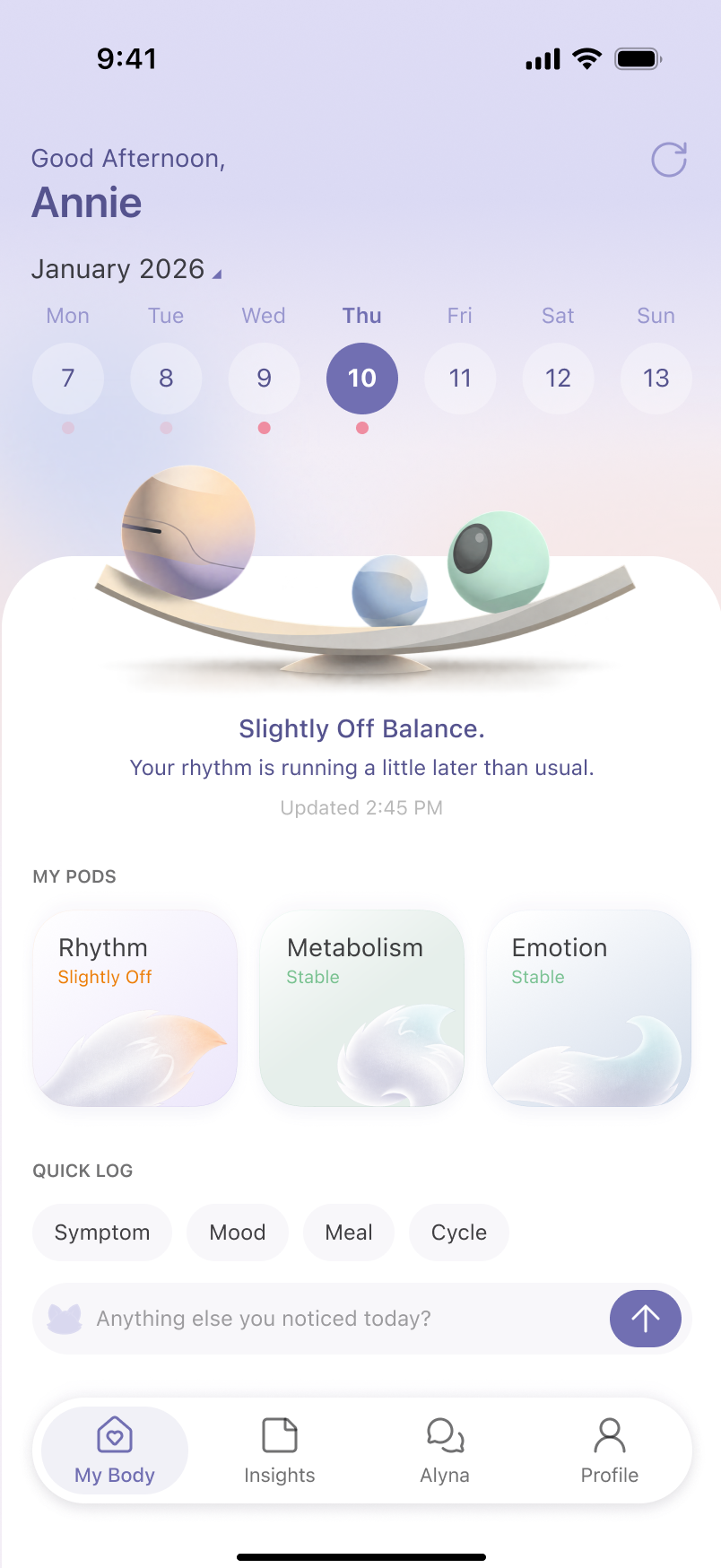
The experience begins with My Body, where Rhythm, Metabolism, and Emotion come together in one glance — showing how the body is balancing today and giving users a clear place to start.
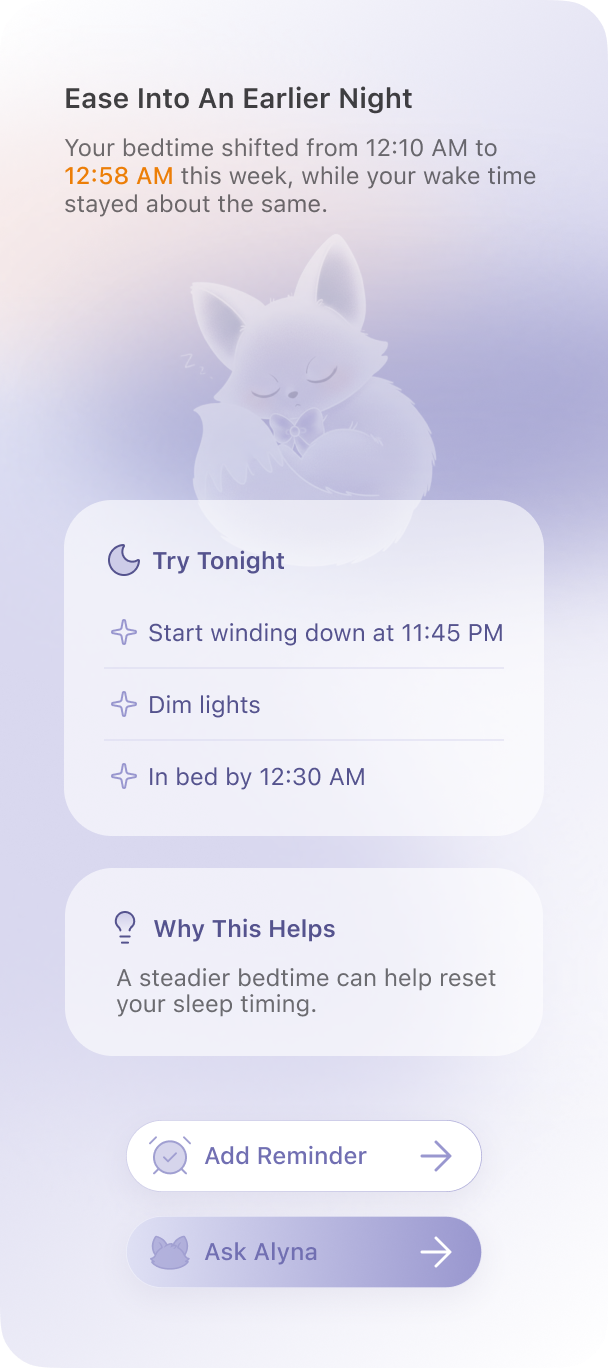
From there, users can move from the overall balance into each Pod to see what has changed, what may be contributing to it, and a small action they can take next.


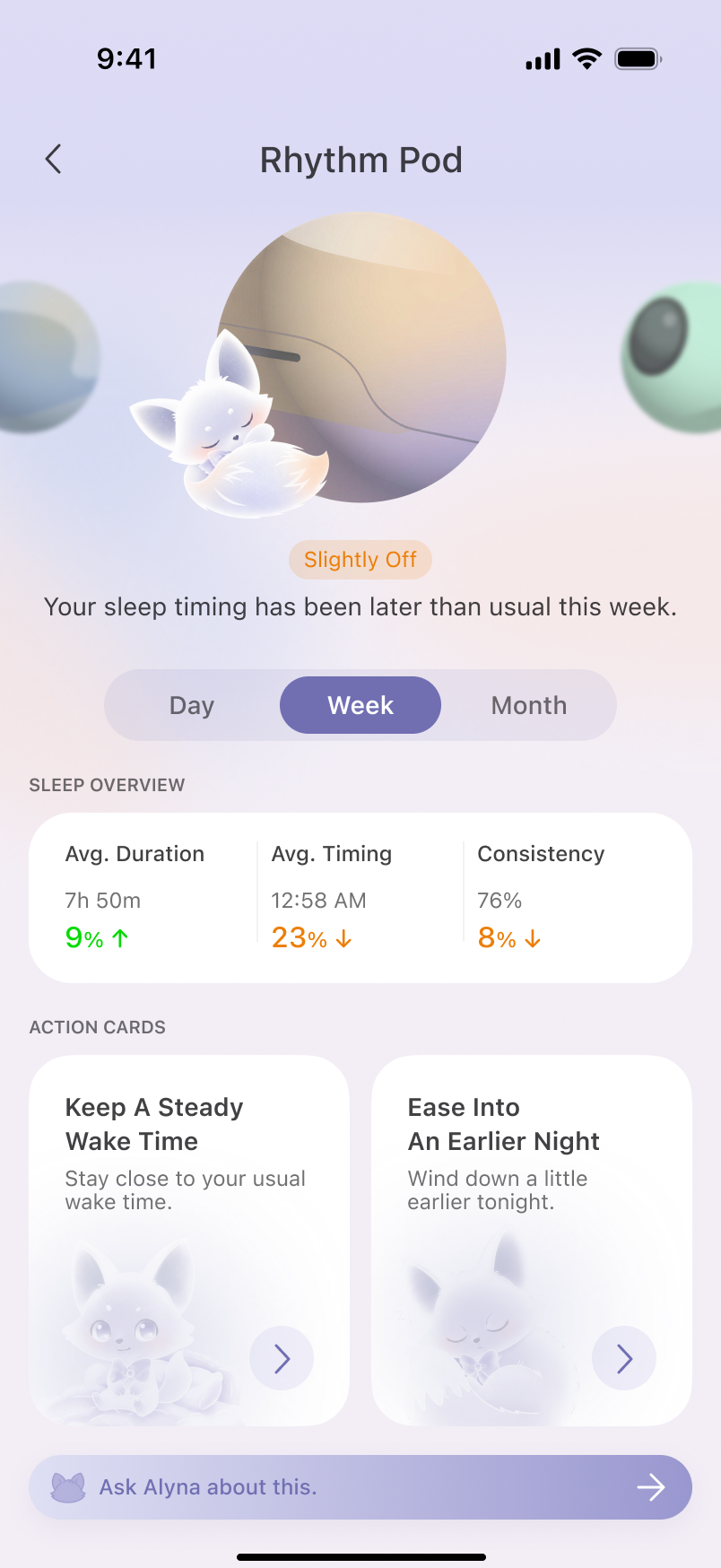
My Body · Home Glanceable State
Rhythm Pod Detail Page Progressive Disclosure
Action Card Recommendation Detail






02 LoggingAI
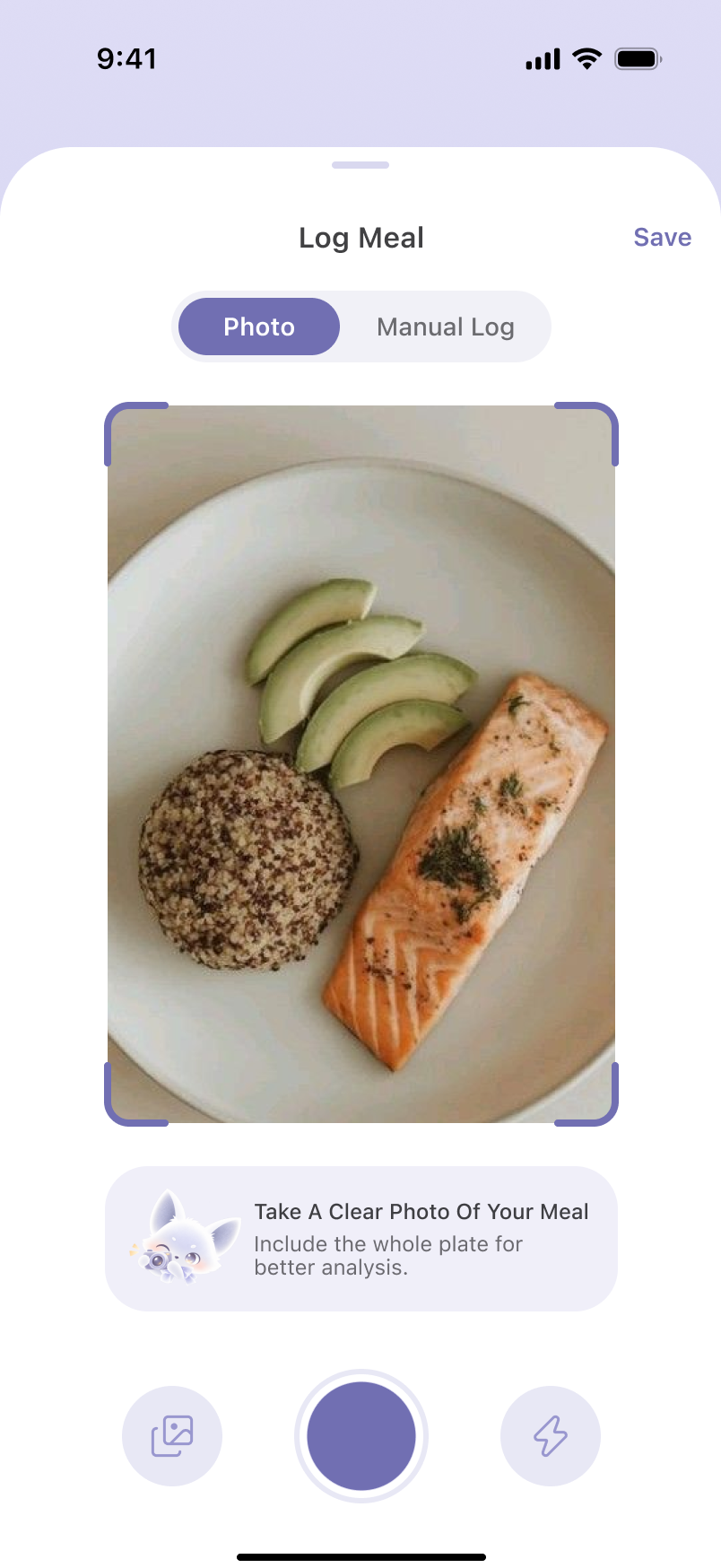
Not every meaningful change can be captured by a sensor. Logging gives users a shortcut to add what they notice themselves, from symptoms and mood to meals and cycle changes.
How something is logged depends on what is being recorded — for example, meals can be captured with a photo instead of entered manually.

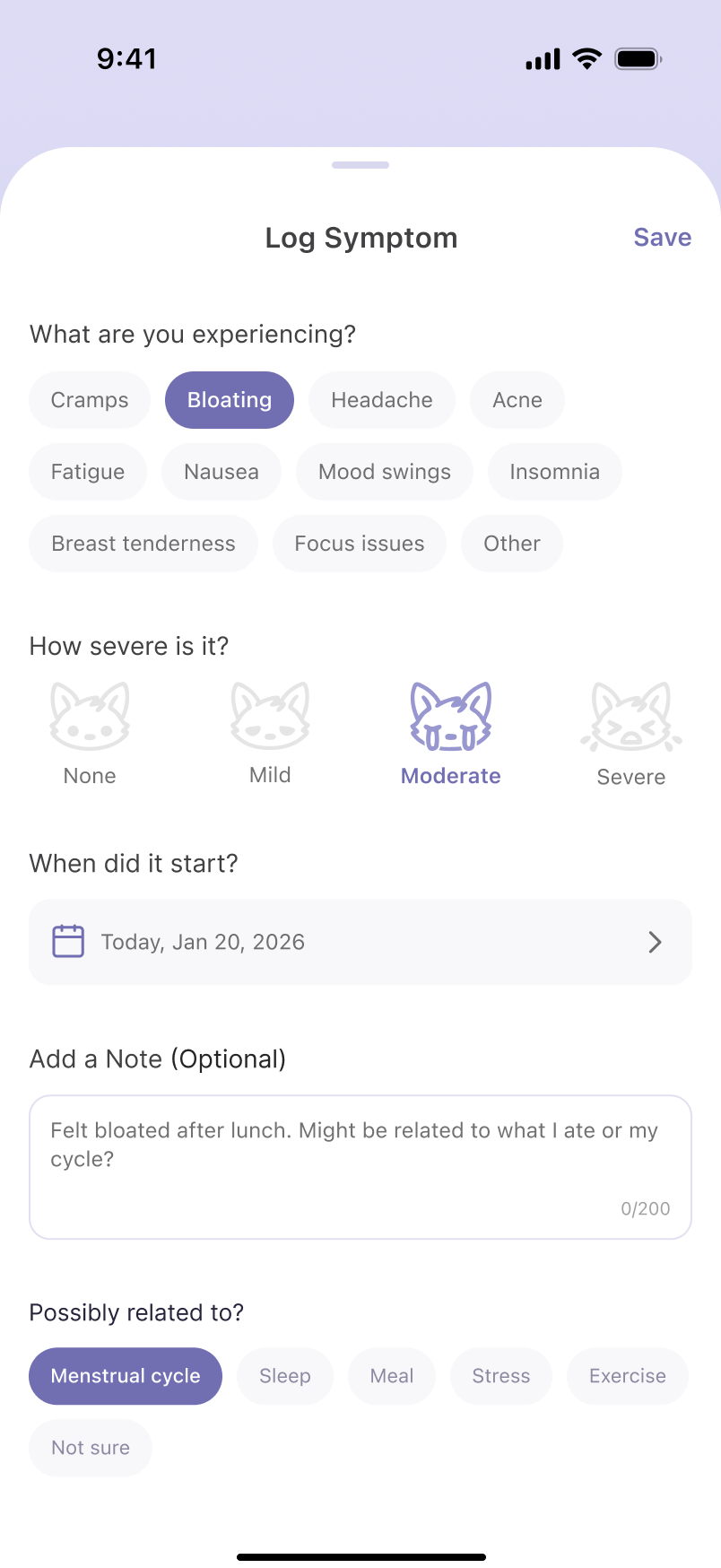
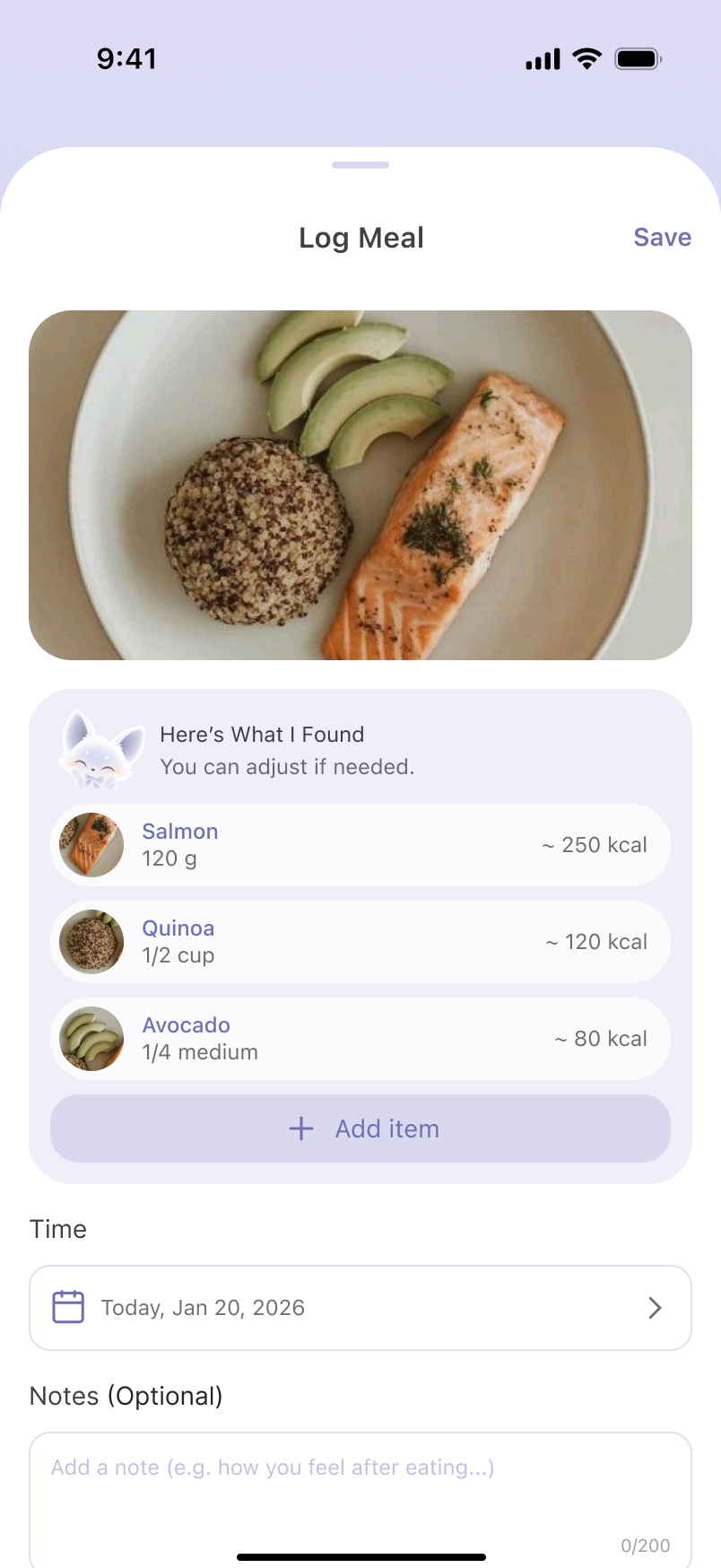
Log Symptom · Manual Entry Symptom Quick Log
Log Meal · Photo Capture Photo-Based Logging
Log Meal · AI Review AI-Assisted Review




03 Dive Into Your Data
Insights turns a growing health database into an approachable overview, surfacing Key Insights and Personal Patterns while keeping the underlying evidence within reach.

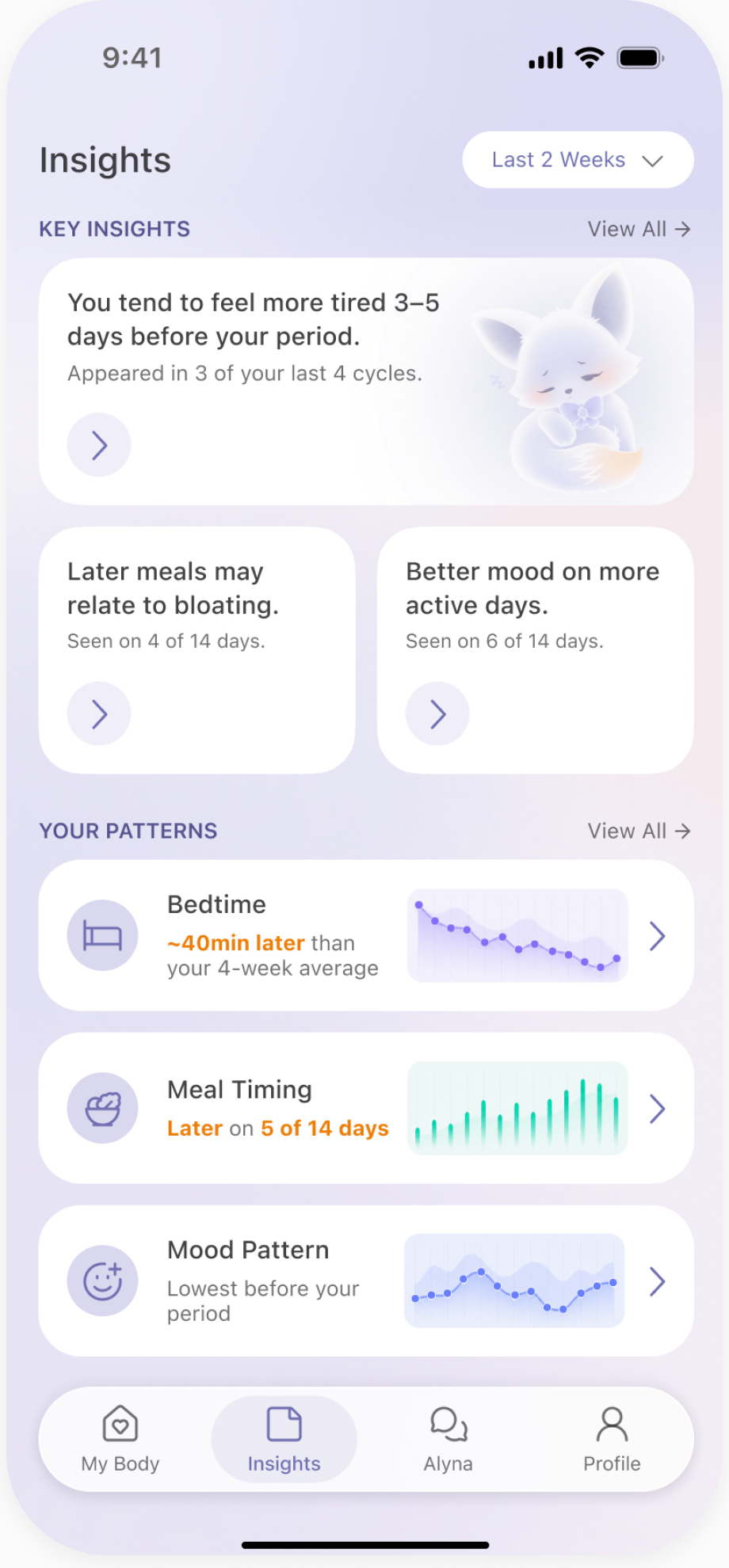
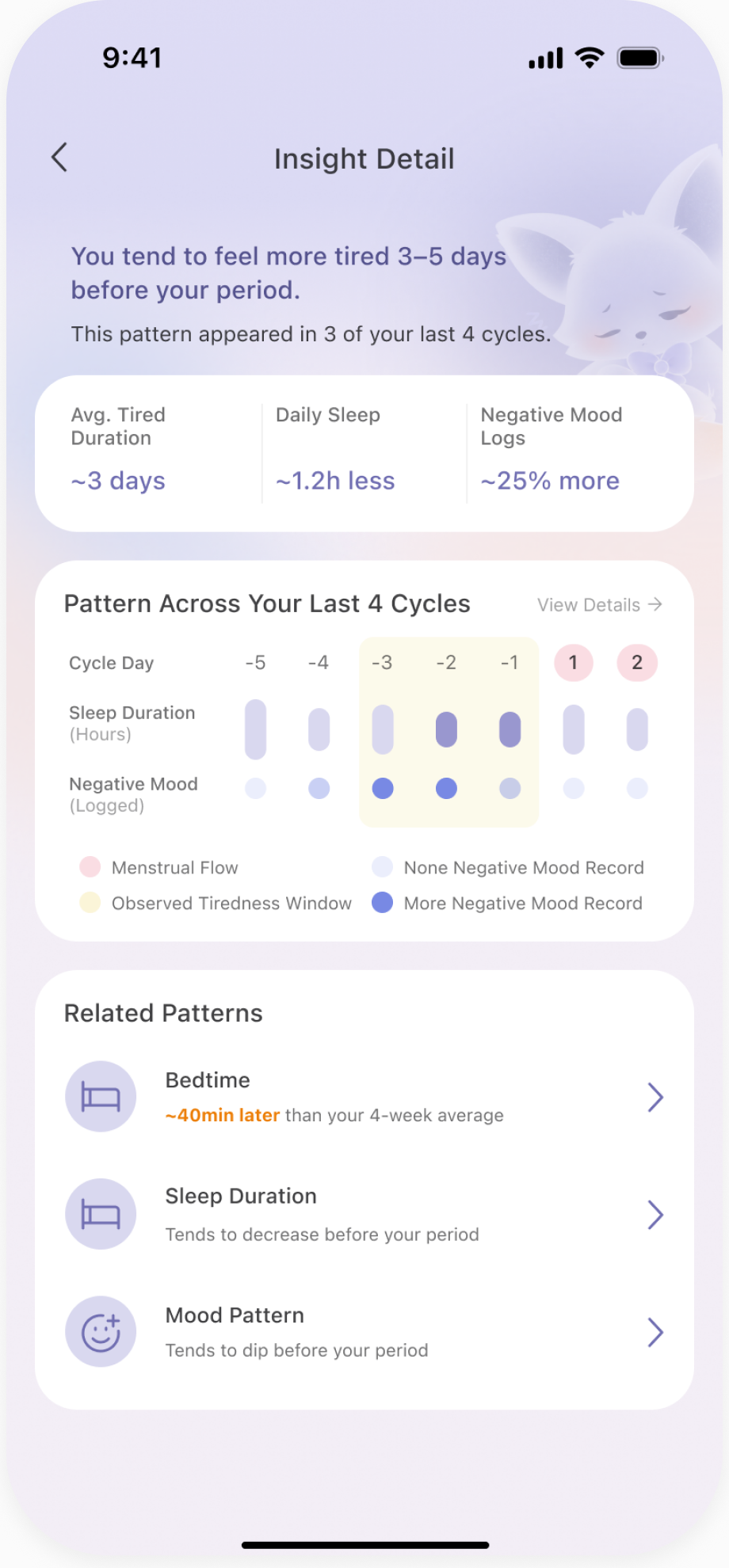
Insights · Overview Patterns at a Glance
Insight Detail · Evidence Evidence Behind the Insight





04 Alyna as a Personal Health CompanionAI
The Aligna app provides a dedicated space to talk with Alyna, giving users a natural-language entry point into their health data. Alyna can draw from information across the system to answer questions in context, while past conversations remain available for users to revisit and continue over time.

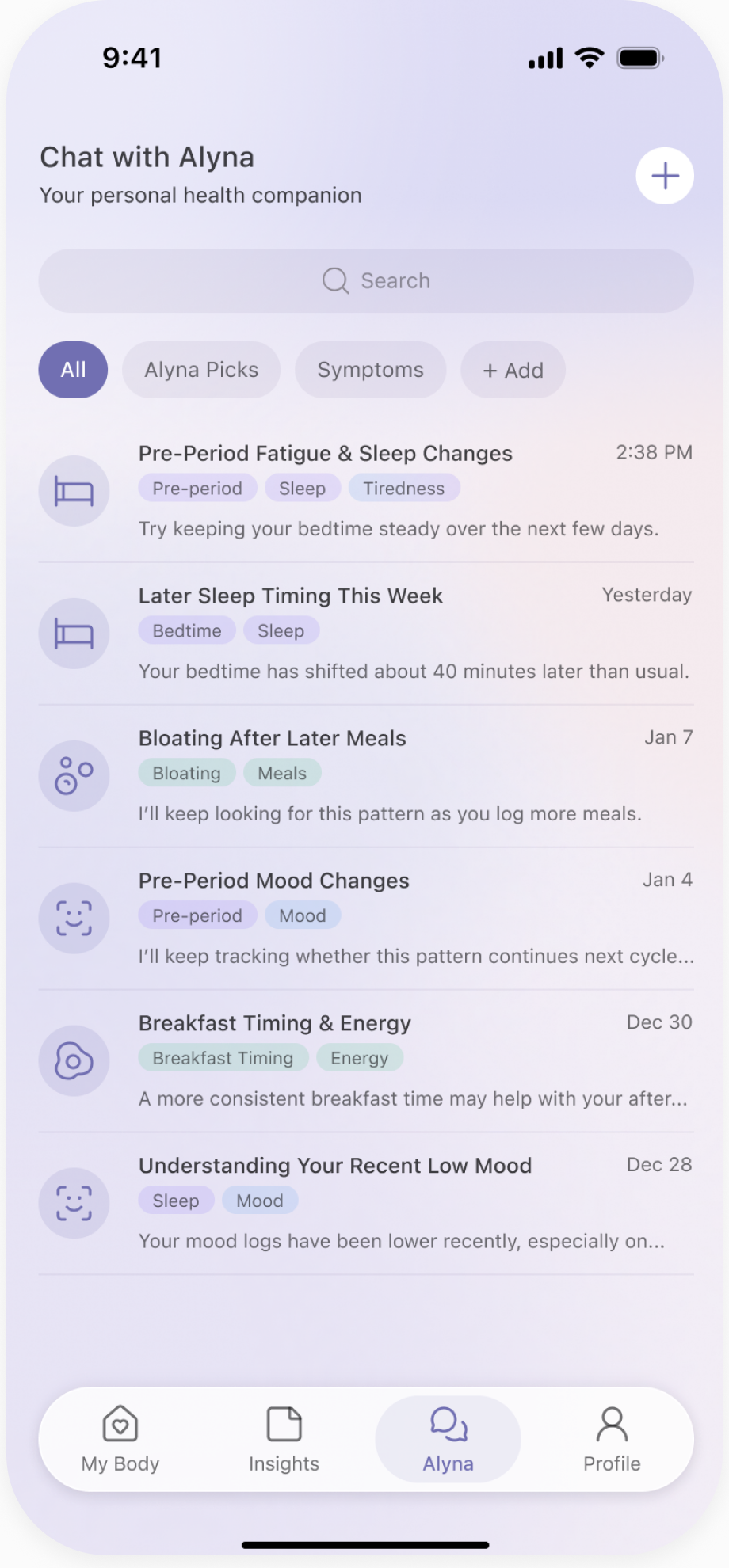
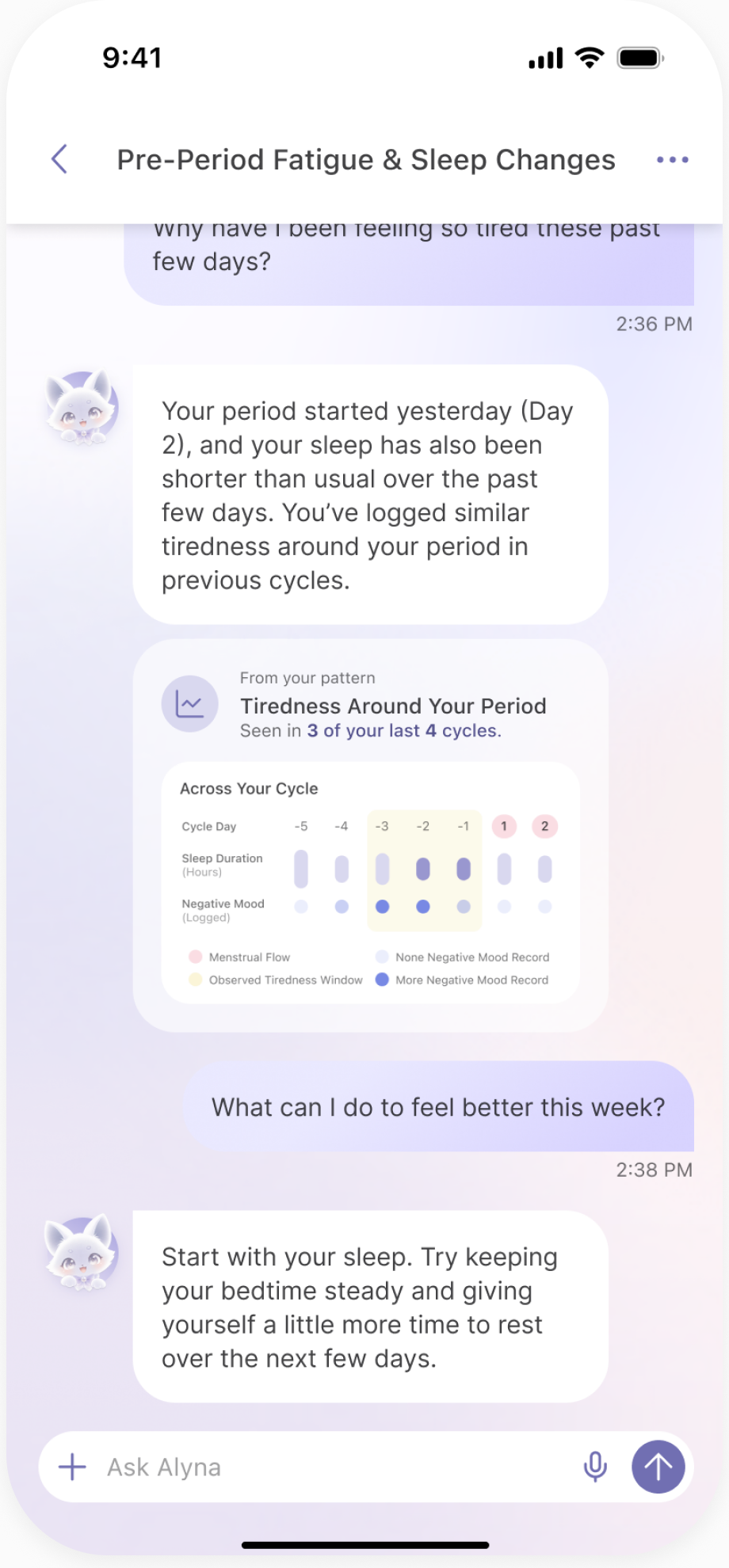
Alyna · Chat History Health Conversation Library
Alyna · Conversation Data-Grounded Guidance



05 Keeping Personalization VisibleAI
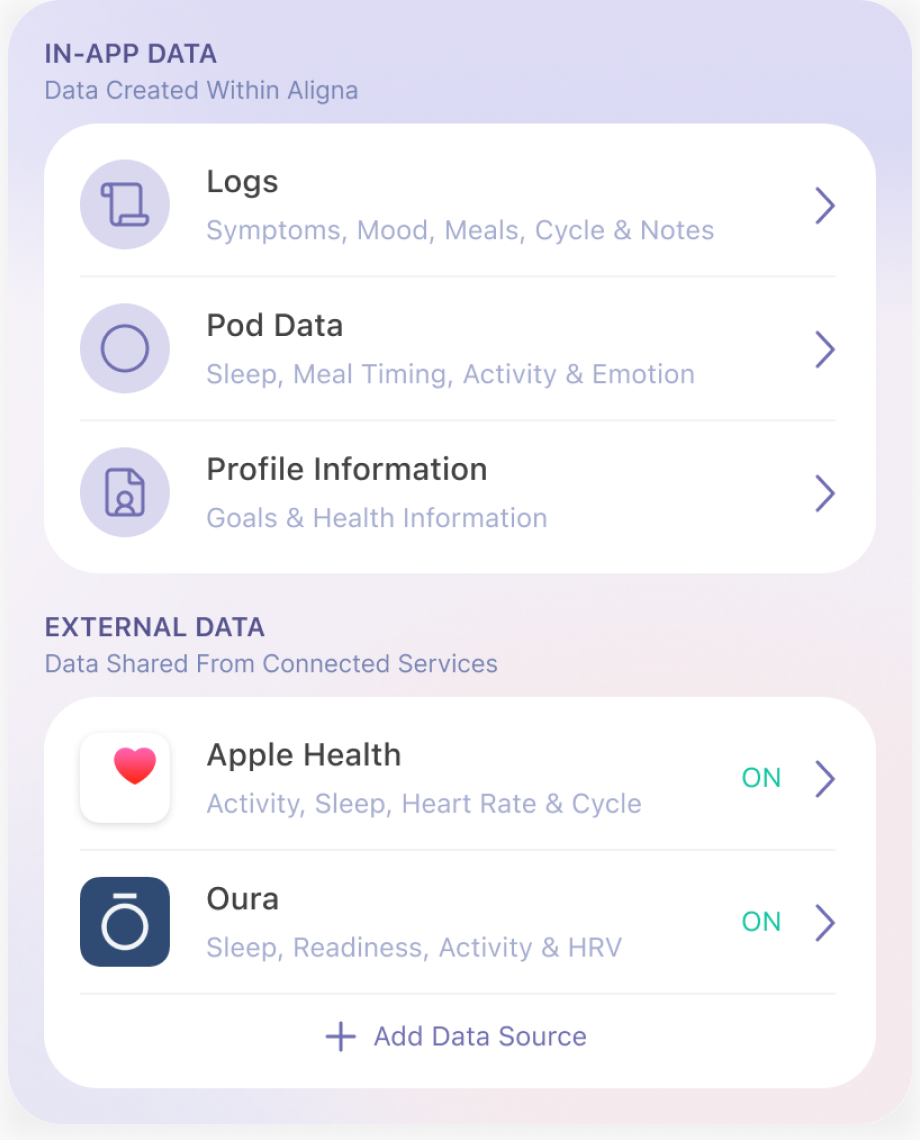
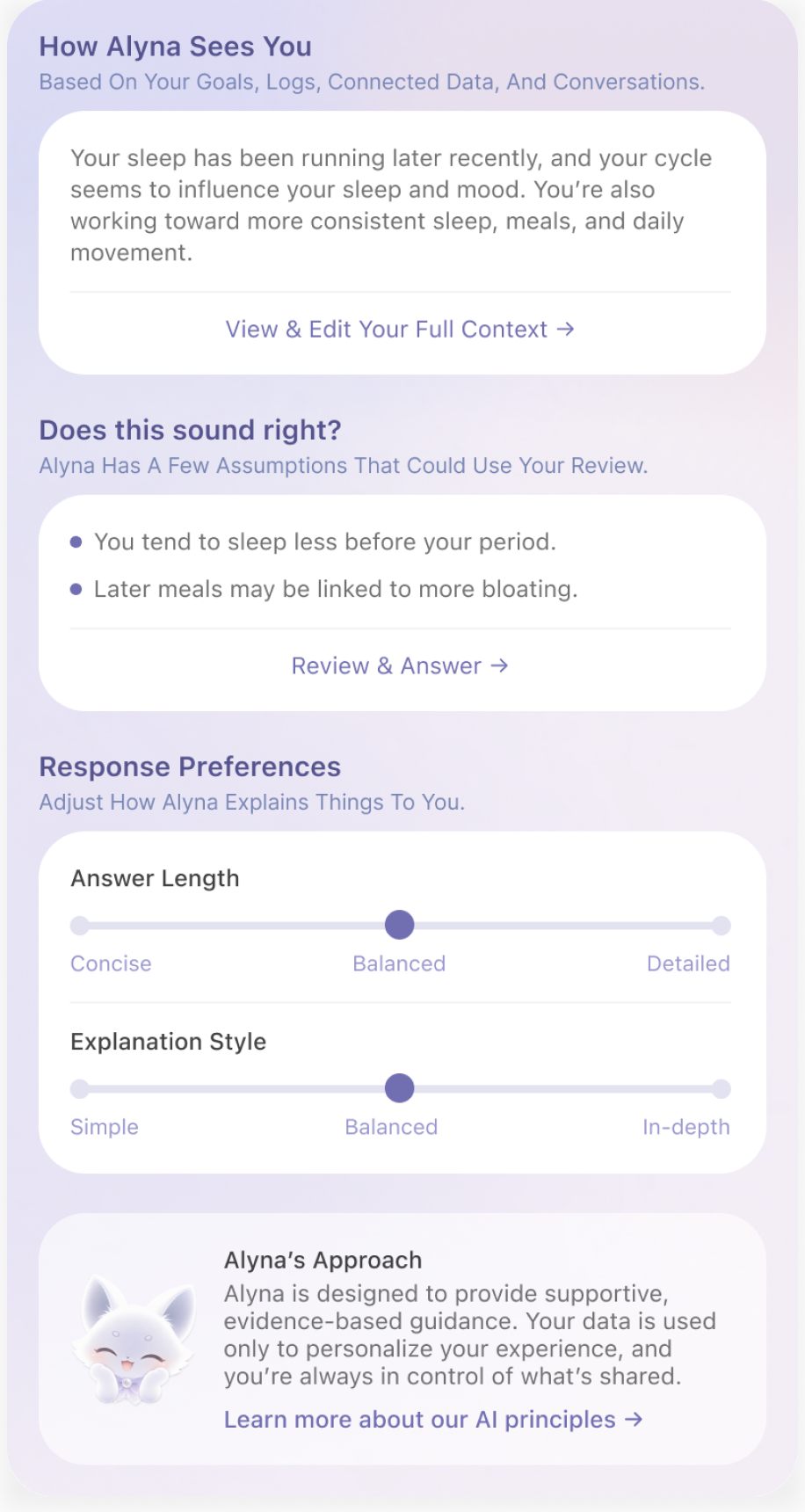
As Alyna learns from the user over time, the data and assumptions behind that personalization should remain visible and adjustable. Profile brings these controls together, letting users manage what Alyna knows, where that information comes from, and how it shapes their experience.



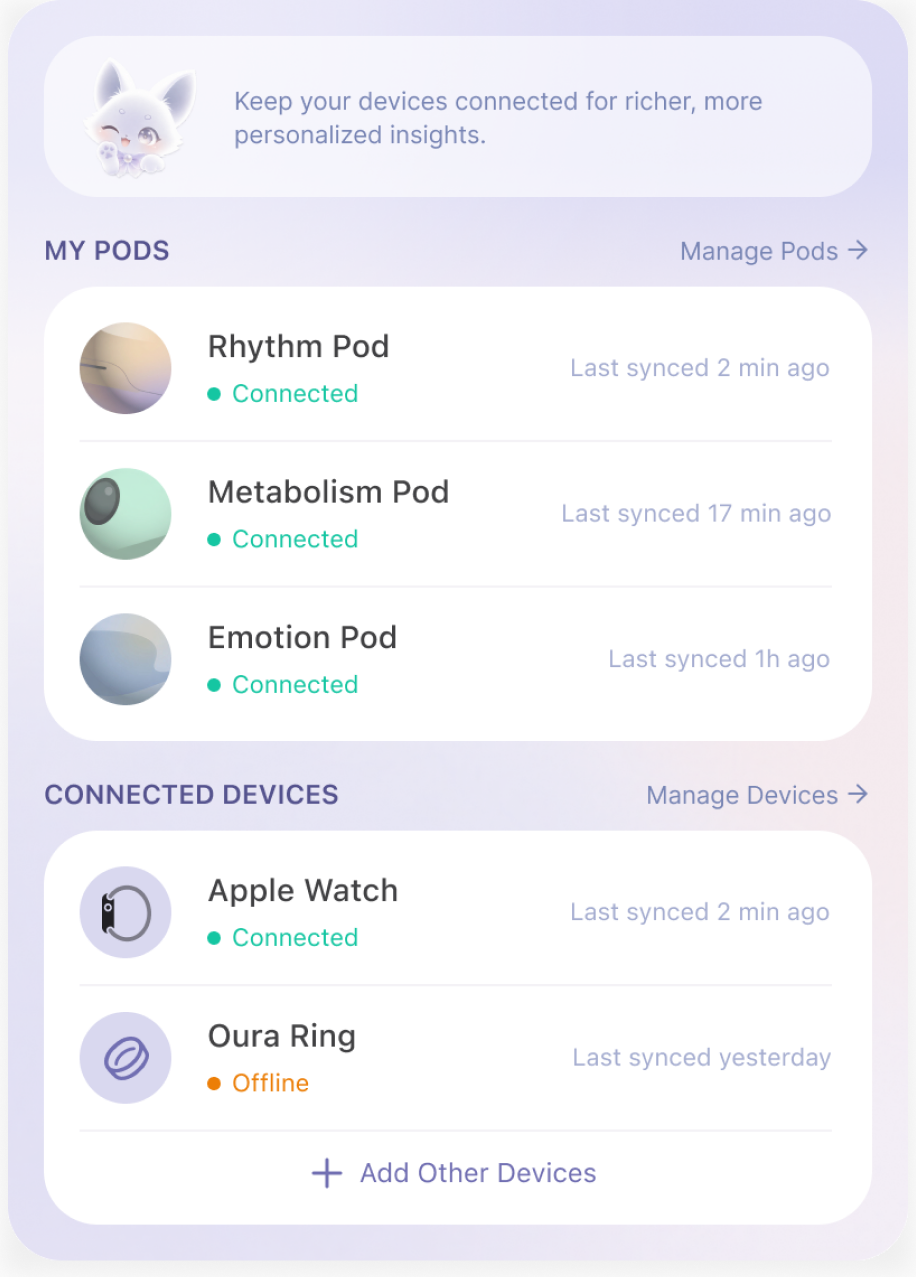
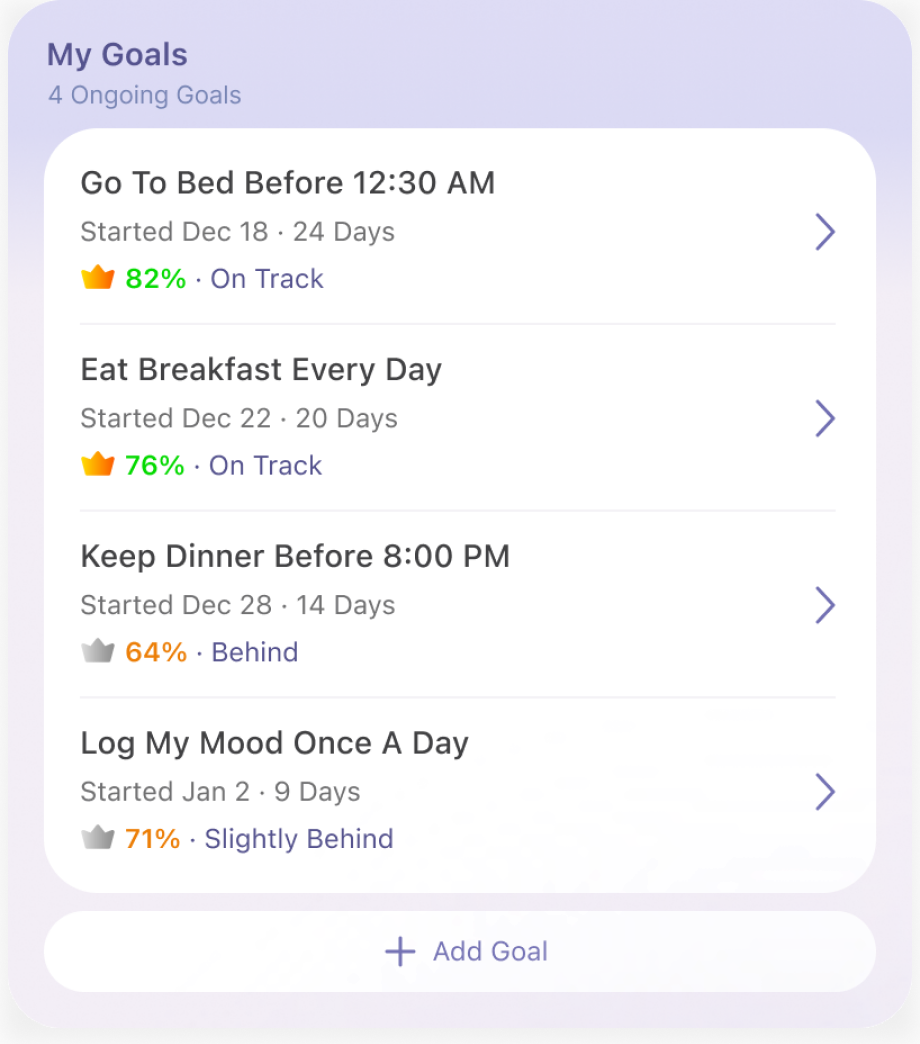
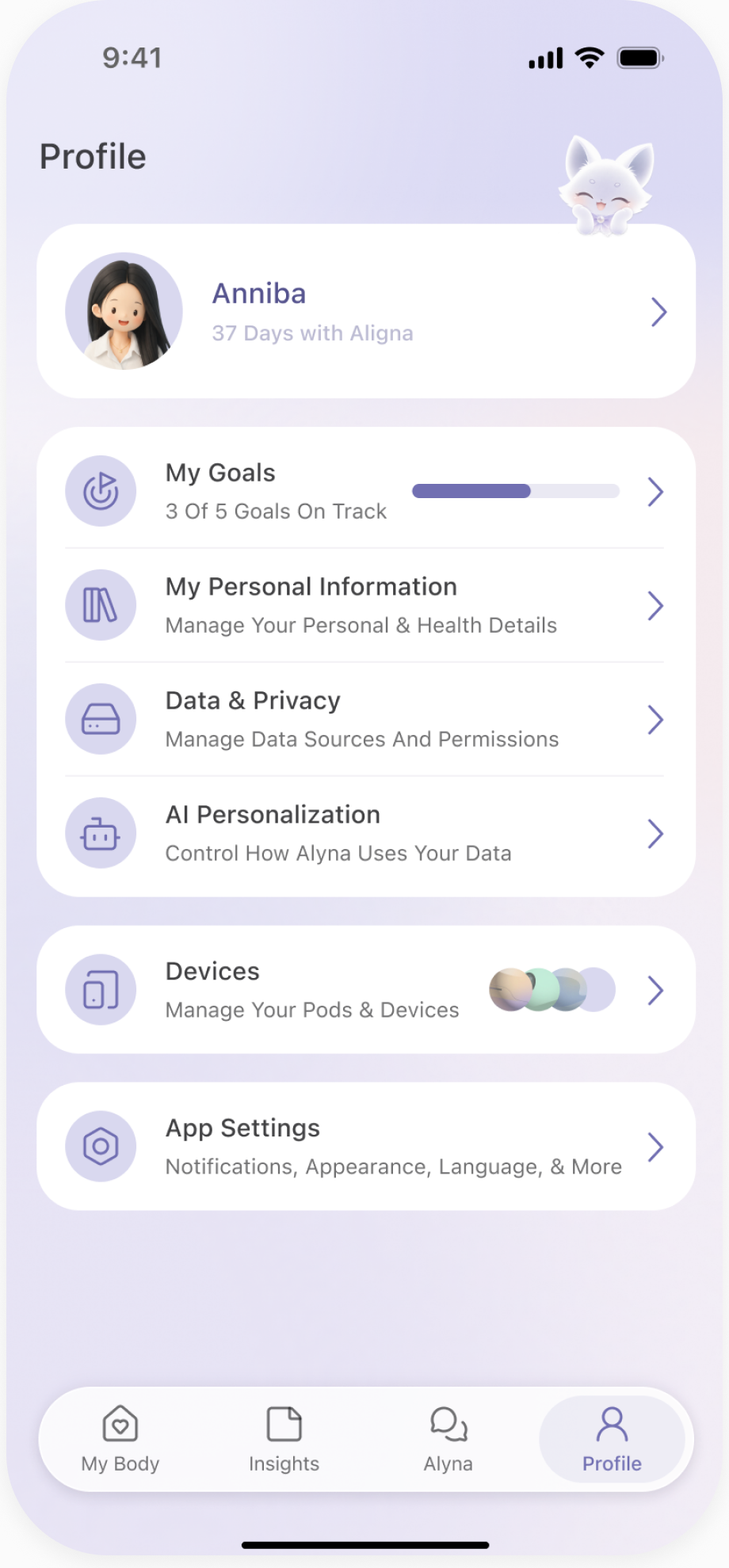
Devices
Goals
Profile · Personalization Hub Manage Your Aligna Experience
Data Sources
AI Personalization


06 Extending Aligna Beyond the App
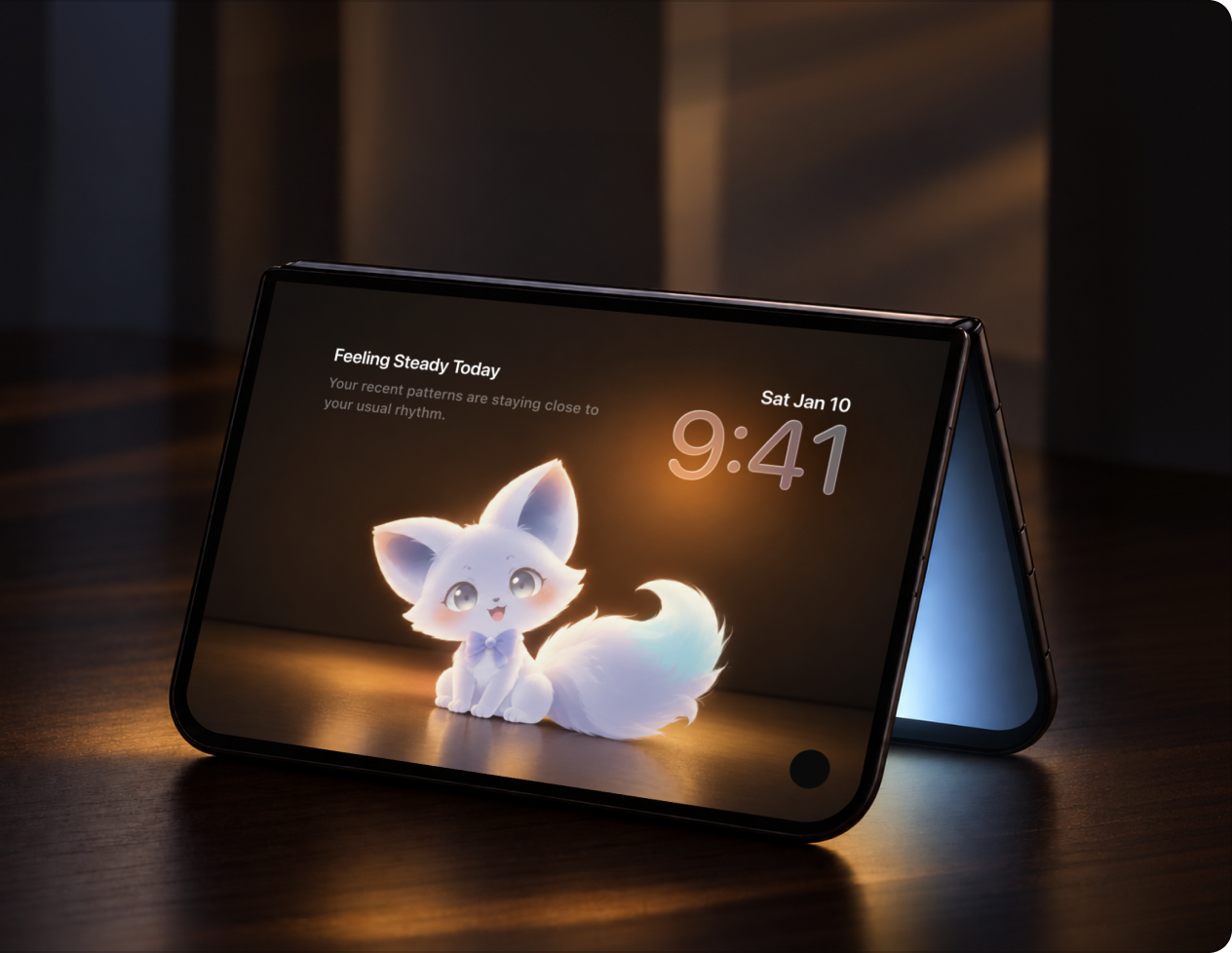
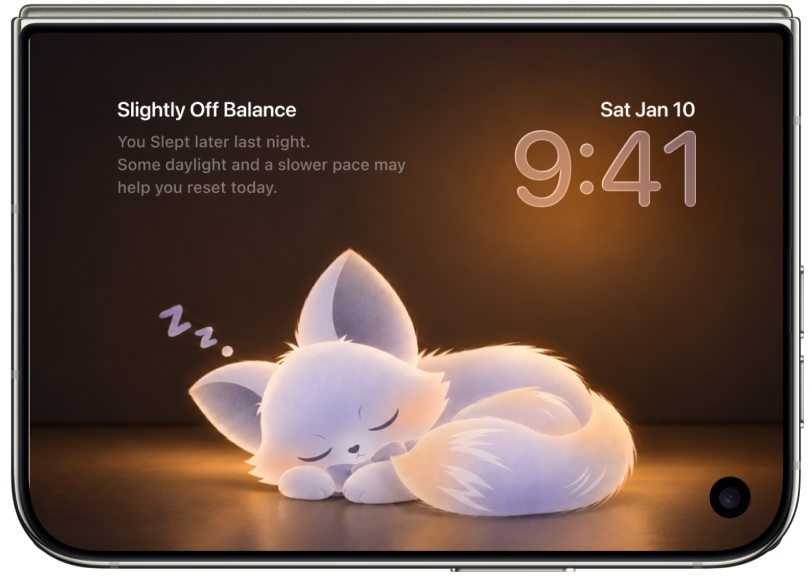
Aligna extends beyond the app into a more ambient experience when iPhone Duo is placed nearby.
Rather than recreating the full interface, this mode focuses on glanceable information — the time, Alina’s current state, and state-aware ambient lighting — allowing users to stay connected to their body balance without actively opening the app.
Slightly Off Balance Resting State
Feeling Steady Today Stable State

State-Aware Ambient Light - Soft Cyan = Stable
One System, Working Together
ALIGNA brings the Pods, everyday health data, Alyna, and the app into one connected system. The physical companions make changes easier to notice in daily life, while the digital experience reveals the patterns behind them. Together, they help users notice what is changing, understand what it may mean, and decide what to do next.
Designed for a Growing Need
PMOS affects a large global population, while the broader women’s digital health market continues to grow—creating space for more connected, personalized approaches to everyday health.
170M+
women worldwide are living with PMOS
The Lancet · 2026
$9.5B by 2030
Projected global women’s digital health market
20.4% CAGR · 2024–2030 · Grand View Research
Where ALIGNA Could Go Next
The next step is to validate whether ambient physical signals can improve awareness and long-term engagement, while expanding ALIGNA’s connections with wearables, health platforms, and longitudinal health data. Over time, the system could also extend beyond PMOS to support women navigating a broader range of hormonal conditions.
ALIGNA aims to shift the experience from “My body has failed me” to “I have PMOS, but I understand my body. I know how to manage it. PMOS is part of my life, but it doesn’t have to define how I live.”
Ultimately, ALIGNA turns everyday signals into a clearer understanding of one’s own body, making hormonal health easier to notice, understand, and live with for people with PMOS, while also supporting communication between them and those closest to them through its physical presence.